Flood Zones on the North Shore - What Every Buyer Needs to Know Before They Fall in Love
Flood Zones on the North Shore - What Every Buyer Needs to Know Before They Fall in Love
There is a particular sequence of events that nobody in real estate likes to talk about. Buyer finds home. Buyer falls in love with home. Buyer makes offer. Buyer discovers, somewhere between offer and closing, that the home sits in a flood zone. Buyer has questions nobody prepared them to ask.
This article is the preparation.
What a flood zone actually means
FEMA - the Federal Emergency Management Agency - maps flood risk across the United States and assigns properties to zones based on their likelihood of flooding in any given year. The zones that matter most to North Shore buyers are:
Zone X - minimal flood risk. Standard homeowner's insurance applies. Most properties fall here.
Zone AE - high risk. These properties have a 1 percent annual chance of flooding - what FEMA calls the 100-year flood plain. If you have a federally backed mortgage on a property in Zone AE, flood insurance is not optional. It is required.
Zone VE - coastal high hazard. The most serious designation. Wave action is a factor in addition to flooding. Properties here carry the highest insurance costs and the most significant risk.
Why the North Shore deserves particular attention
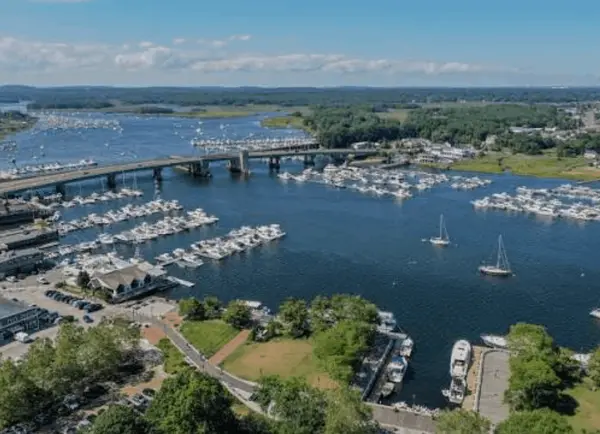
This is a coastal market. Plum Island, Salisbury Beach, parts of Newburyport, Gloucester, Rockport, Hampton - these are places where the relationship between land and water is part of the appeal and, occasionally, part of the risk.
FEMA updated its flood maps across Massachusetts in recent years. Some properties that previously sat outside flood zones found themselves inside them. Some that appeared high risk turned out to carry less exposure than the maps suggested once elevation certificates were properly assessed. The maps are better than they were. They are not perfect.
What this means in practice is that the flood zone designation on a listing is a starting point for the conversation, not the end of it.
The elevation certificate
This is the document that actually tells you what you need to know. An elevation certificate is a survey that establishes the precise elevation of a property relative to the Base Flood Elevation - the level at which FEMA calculates flood risk. If a home sits above the Base Flood Elevation, even in a designated Zone AE, the actual insurance cost can be dramatically lower than the zone designation alone would suggest.
Request the elevation certificate early. Before you are emotionally committed. Before the inspection. Ideally before the offer, if the seller has one available.
The buyers who get caught off guard are almost always the ones who assumed the zone designation told the whole story.
What flood insurance actually costs
The numbers vary more than most buyers expect - and more than most articles will tell you. Through the National Flood Insurance Programme, Massachusetts averages run around $1,294 per year, but that figure can be misleading for coastal North Shore properties where Zone AE and VE designations, foundation type, elevation and coverage level can push annual premiums to $3,000, $5,000 or considerably higher.
The private flood insurance market has grown significantly and in some cases offers more competitive rates than NFIP - particularly for well-elevated properties. But private pricing is equally variable and equally property-specific.
The honest answer is that no article, including this one, can tell you what flood insurance will cost for a specific home. Only an actual quote can do that. Get one - from at least two providers - before you waive any contingencies. The range between the best and worst case is wide enough to matter.
The practical checklist
Before you make an offer on any North Shore coastal property:
Check the FEMA flood map at msc.fema.gov - enter the address and see which zone applies.
Ask the seller for the elevation certificate if one exists. Many do. Some sellers are surprised to find they have one buried in their paperwork.
Get an insurance quote from at least two providers before waiving any contingencies. Numbers are more useful than estimates.
Ask your agent whether flood insurance has been a factor in previous sales on that street. Pattern matters.
The perspective worth keeping
Flood risk on the North Shore is real. It is also manageable, well documented and - for the majority of properties - not the dealbreaker it can initially appear to be. The homes that catch buyers off guard are not typically the ones in obvious coastal locations. They are the ones a mile inland where an updated FEMA map quietly moved the boundary.
Knowledge removes the surprise. The surprise is the only part that is actually dangerous.
Coastal Massachusetts has been people's home for centuries. The water is part of the story - not a reason to avoid it, but a chapter worth reading carefully before you sign.
Stories matter. Because when emotions are sparked, decisions follow. And if you're ready for your next real estate chapter, I'd love to stand by your side and help you write it. Call, text or email. Let's start the journey.
#realtor #evbythesea #northshorehomes #newburyport #luxuryrealestate #northshorema #storytellingrealtor #coastalrealestate
Categories
Recent Posts